Workers Compensation Insurance
PROTECT YOUR EMPLOYEES.
PROTECT YOUR BUSINESS.
Workplace injuries can happen in any industry. Tuve Insurance helps Minnesota and Iowa businesses meet their legal requirements and protect their employees. We offer reliable workers’ compensation insurance solutions tailored to your business.
- Medical Bills
- Rehabilition Costs
- State Mandated
- Lost Wages
- Employers Liability
- Audit Assistance
GET A QUICK QUOTE
it only takes a minute
Your information is secure and will never be shared
Protect Your Employees and Your Minnesota Business
A workplace injury can impact an employee’s health, income, and ability to work, while also resulting in medical costs, lost productivity, and legal exposure for employers. Workers’ compensation insurance provides benefits for covered work-related injuries or illnesses and helps businesses comply with Minnesota law.
Tuve Insurance offers workers’ compensation insurance in Lakeville, MN, serving employers across Minnesota. As a veteran-owned independent agency, we help business owners compare quotes, understand class codes, review payroll estimates, and select appropriate coverage. Call 952-469-0428 to discuss your workers’ compensation needs.
What Is Workers’ Compensation Insurance?
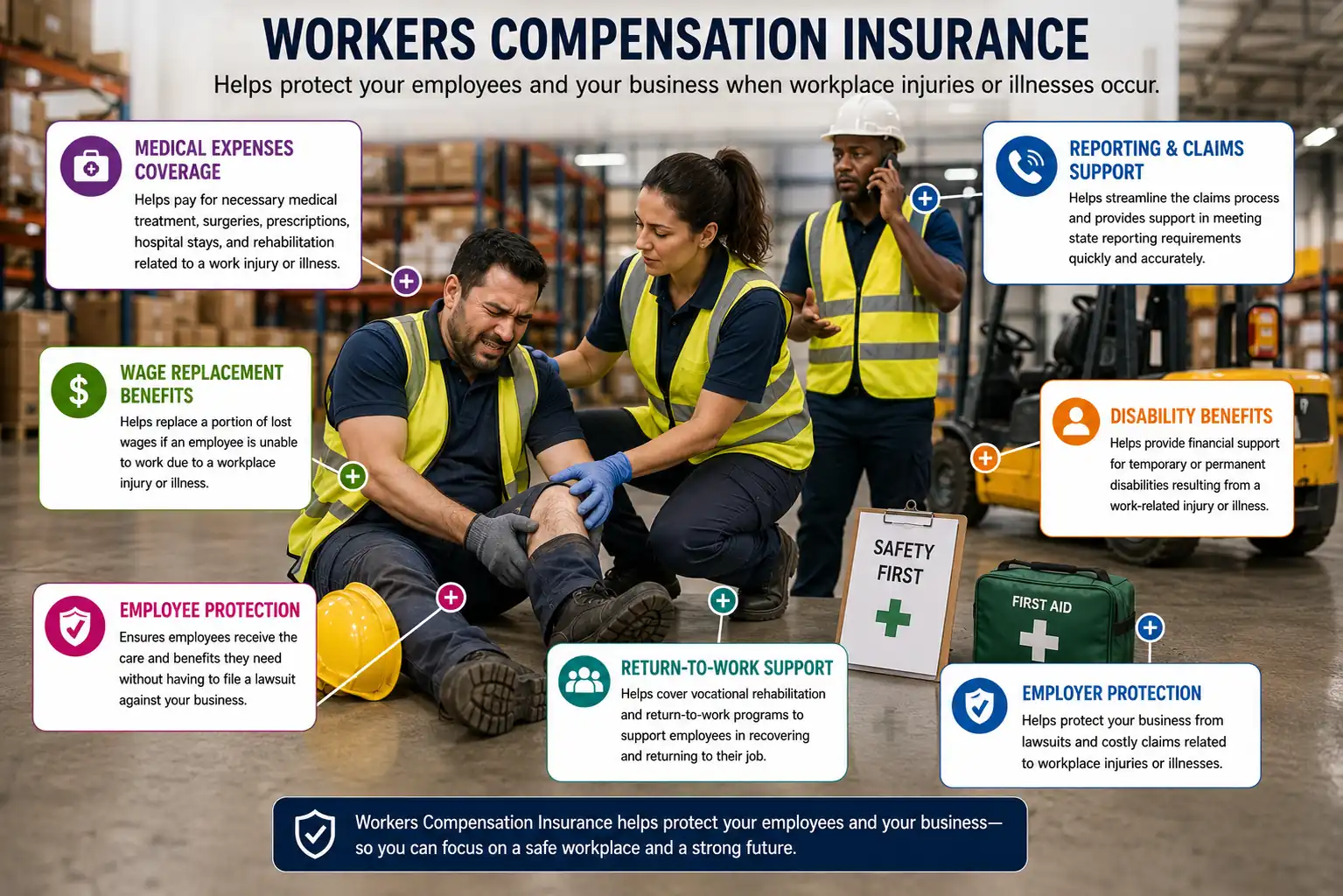
Workers’ compensation insurance, also known as workers’ comp, supports employees after a covered job-related injury or illness. It may cover medical expenses, replace part of lost wages, provide vocational rehabilitation, and offer benefits for permanent impairment or work-related death.
Minnesota workers’ compensation is generally a no-fault system. An eligible employee does not ordinarily need to prove the employer was negligent to receive covered benefits.
Is Workers’ Compensation Insurance Required in Minnesota?
Minnesota law generally requires employers to purchase workers’ compensation insurance or obtain approval to self-insure. Some limited exclusions may apply to certain owners, officers, family members, household workers, or farm operations. Employers should review the rules before assuming they qualify for an exclusion.
Independent contractor status requires careful review. Labeling a worker as an independent contractor, issuing a 1099, or signing an agreement does not automatically determine their status for workers’ compensation purposes.
Operating without required coverage can result in significant penalties. Minnesota imposes administrative fines for each uninsured employee and week of noncompliance. Licensing agencies may also require proof of workers’ compensation before issuing or renewing licenses and permits.
What Does Minnesota Workers’ Compensation Cover?
The Minnesota Department of Labor and Industry identifies three basic workers’ compensation benefit categories: wage loss, medical benefits, and vocational rehabilitation.
Medical benefits may cover necessary treatment related to the injury, such as physician services, hospital care, surgery, physical therapy, prescriptions, and supplies.
Wage-loss benefits may replace part of an employee’s income if they cannot perform regular duties or earn less due to restrictions.
Vocational rehabilitation may help an injured employee return to suitable employment through return-to-work planning, job placement assistance, or retraining.
Workers’ Compensation Insurance for Minnesota Industries
Tuve Insurance arranges workers’ compensation insurance for small businesses, including contractors, restaurants, retailers, offices, manufacturers, auto repair shops, landscapers, healthcare organizations, nonprofits, property managers, transportation companies, and professional service firms.
Each occupation has a workers’ compensation class code based on job duties. Office employees typically have a different injury risk than roofers, machine operators, drivers, or construction workers.
Accurate class codes affect pricing and ensure the policy matches your operations.
Incorrect classifications can result in inaccurate premiums and significant adjustments after a policy audit.
How Much Does Workers’ Compensation Insurance Cost in Minnesota?
The cost of workers’ compensation insurance in Minnesota depends on payroll, employee classifications, industry, claim history, experience modification, locations, safety practices, and carrier pricing. Premiums are typically estimated using payroll assigned to class codes and adjusted by rating factors.
An experience modification factor may influence pricing for eligible employers by comparing their loss experience with that of similar businesses. MWCIA explains that experience rating compares an individual employer’s safety and loss experience with the average experience of employers in the same classification.
Most workers’ compensation policies are audited after the policy term. The insurer compares estimated payroll and classifications to actual figures. If payroll increased, higher-risk work was performed, or uninsured subcontractors were used, additional premium may be owed.
Maintaining organized payroll records, certificates of insurance, and subcontractor agreements can simplify the audit.
Assigned Risk Workers’ Compensation in Minnesota
Some businesses may have difficulty obtaining workers’ compensation coverage in the standard market due to their industry, loss history, limited operating history, or hazardous work. Minnesota’s Assigned Risk Plan provides coverage for eligible employers rejected by licensed insurers.
Assigned risk coverage may be necessary but is not always the best long-term solution. Tuve Insurance can help determine if your company qualifies for a standard carrier with better pricing, payment options, loss-control resources, or service.
What Should an Employer Do After a Workplace Injury?
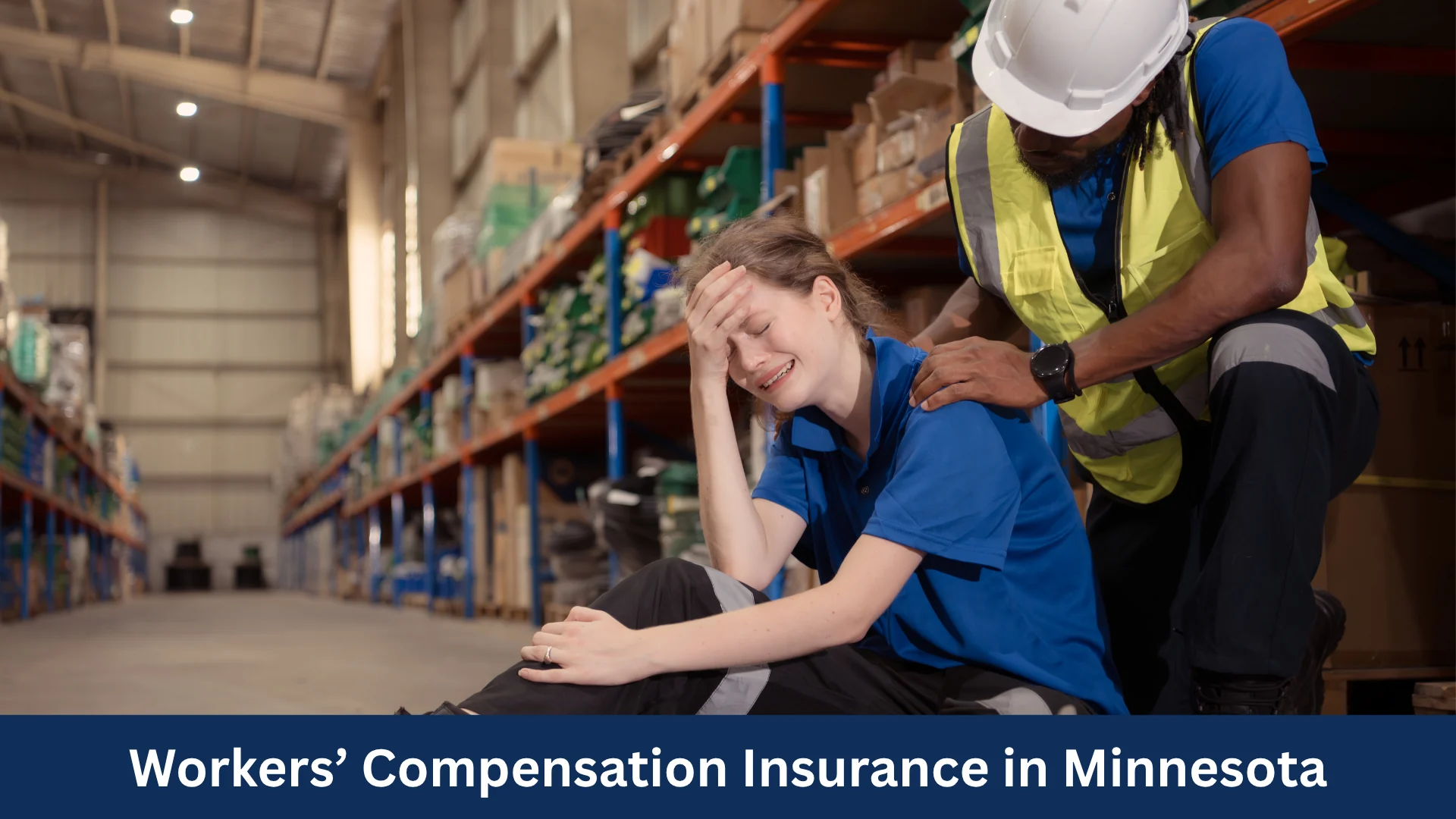
Encourage employees to report injuries immediately and arrange appropriate medical care. Document the incident, preserve relevant photos or witness information, and notify the workers’ compensation insurer promptly. Minnesota requires quick reporting of fatalities and serious injuries.
For other injuries involving more than three days of disability, employers must send the First Report of Injury to the insurer within ten days.
Employers should stay in contact with the employee, follow medical restrictions, and consider transitional or modified work when appropriate. Prompt reporting and effective return-to-work planning can reduce delays and support recovery.
Why Choose Tuve Insurance?
Tuve Insurance is a veteran-owned independent agency in Lakeville, Minnesota. We represent multiple insurance companies, allowing us to compare workers’ compensation quotes and offer more options.
We can also coordinate workers’ compensation with general liability, commercial auto, commercial property, cyber liability, professional liability, and commercial umbrella insurance.
Request a Workers’ Compensation Insurance Quote
Protect your employees, meet insurance requirements, and reduce the risk of coverage gaps. Contact Tuve Insurance for a Minnesota workers’ compensation review. We will help assess your classifications, payroll estimates, experience modification, subcontractor exposure, and carrier options.
Call Tuve Insurance at 952-469-0428 to request a workers’ compensation quote in Lakeville, MN. Whether you are hiring your first employee, replacing assigned risk coverage, or reviewing an existing program, our team is ready to assist.
Frequently Asked Questions
Most Minnesota employers must purchase workers’ compensation insurance or obtain authorization to self-insure. Limited exclusions may apply, but eligibility depends on ownership, relationships, business structure, and job circumstances. Confirm your status before operating without coverage.
Not always. Coverage for sole proprietors, partners, corporate officers, LLC members, and family members varies. Some may be included, excluded, or allowed to elect coverage. Review your policy and Minnesota requirements with an experienced agent.
A true independent contractor is generally not covered under the hiring company’s policy. However, misclassification rules are complex, and uninsured subcontractors may create premium or claim exposure. Obtain certificates of insurance and review working relationships carefully.
Accurate class codes, realistic payroll estimates, employee training, written safety procedures, prompt claim reporting, return-to-work programs, and careful subcontractor management can help lower premiums. Comparing standard-market workers’ compensation quotes through an independent agency may also reveal better options.