Commercial Property Insurance
PROTECT YOUR PROPERTY.
PROTECT YOUR BUSINESS.
Your business depends on your property. Tuve Insurance helps Minnesota and Iowa businesses protect their buildings, equipment, inventory, and income with customized commercial property insurance solutions.
- Property Coverage
- Business Personal Property
- General Liability Insurance
- Business Income Coverage
- Equipment Breakdown
- Replacement Cost Options
GET A QUICK QUOTE
it only takes a minute
Your information is secure and will never be shared
Protect Your Business’s Buildings, Equipment, Inventory, and Income
Your commercial property reflects years of investment and planning. Events such as fire, storms, burst pipes, or theft can disrupt operations, damage equipment, delay orders, and increase expenses. Commercial property insurance protects your business’s physical assets and provides financial support if a covered loss interrupts operations.
Tuve Insurance assists Lakeville business owners in comparing commercial property insurance. As a veteran-owned independent agency, we work with multiple carriers to review coverage, limits, deductibles, and endorsements. We serve a range of businesses, including retail, offices, warehouses, restaurants, contractor shops, apartments, manufacturing, and mixed-use properties. Call Tuve Insurance at 952-469-0428 to request a quote.
What Is Commercial Property Insurance?
Commercial property insurance, also known as business property insurance, protects buildings and business-owned property from covered losses. It can insure owned structures, improvements to leased spaces, furniture, machinery, computers, inventory, tools, signs, supplies, and other physical assets.
A policy can be purchased separately or as part of a business owners policy (BOP). Larger or more complex organizations may require a commercial package policy that combines property, liability, equipment breakdown, inland marine, crime, and business income coverage.
What Does Commercial Property Insurance Cover?
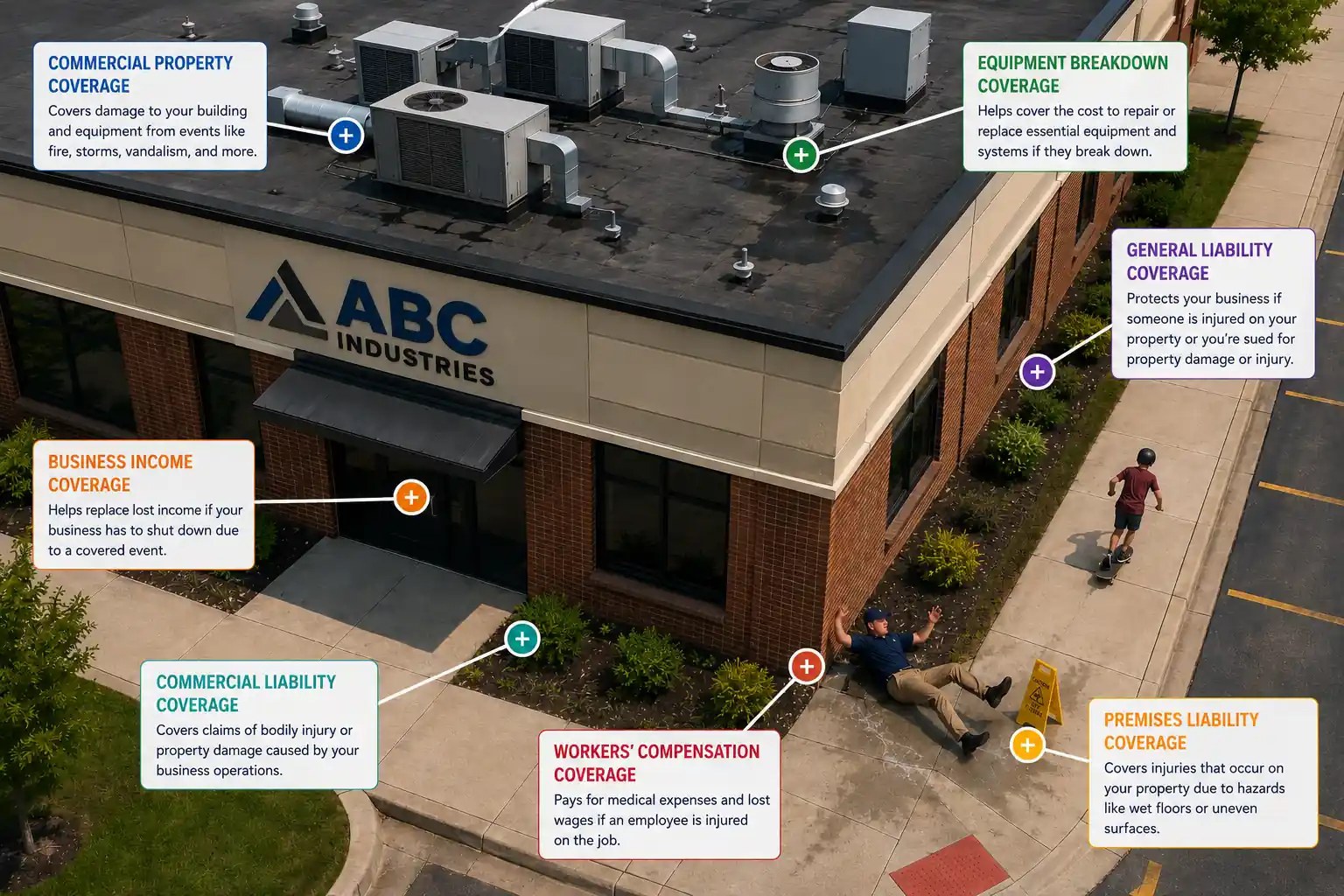
A commercial property policy can cover various property types. Building coverage insures the structure, fixtures, additions, and some outdoor property. Business personal property coverage protects furniture, computers, shelving, machinery, tools, stock, and supplies.
Tenant improvements and betterments coverage protects upgrades you make to rented spaces, such as flooring, walls, counters, lighting, or built-in cabinetry. Property of others coverage can protect customer property in your care, custody, or control if included and properly valued.
Policies specify covered causes of loss, such as fire, lightning, wind, hail, smoke, vandalism, theft, and some water damage. Coverage varies by policy. Flood, earth movement, wear and tear, maintenance issues, sewer backup, and equipment failure are often excluded or require separate coverage.
Minnesota Weather Creates Serious Property Risks
Minnesota businesses face harsh winters, heavy snow, freezing temperatures, ice, wind, hail, and severe storms. These conditions can damage roofs, siding, HVAC systems, windows, signs, and outdoor equipment. Frozen pipes may cause significant water damage, and ice dams can allow moisture into walls and ceilings.
Review wind and hail deductibles carefully. Some policies use a flat deductible, while others use a percentage of the building’s insured value, which can increase out-of-pocket costs. Ask how deductibles apply and whether roof losses are settled at replacement cost or actual cash value.
Replacement Cost Versus Actual Cash Value
A key decision is how damaged property will be valued. Replacement cost coverage pays to repair or replace property with similar materials, subject to policy terms and limits. Actual cash value subtracts depreciation based on age, condition, and useful life.
A building’s insurance value may differ from its market value, purchase price, or tax value. Rebuilding costs include labor, materials, debris removal, contractor demand, architectural work, and code compliance. Insufficient building limits can result in coinsurance penalties or uncovered expenses.
Business Income and Extra Expense Coverage
Property damage can halt operations even after the initial emergency. Business income insurance, or business interruption insurance, may replace lost income and ongoing expenses if a covered loss forces your business to suspend operations.
Extra expenExtra expense coverage can help pay reasonable costs to continue operating, such as renting temporary space, leasing equipment, moving inventory, or paying overtime. Review the waiting period, coverage limit, period of restoration, and maximum recovery period carefully. Adequate business income coverage: a company may have insurance to repair its building but not enough cash flow to survive the shutdown. Consider payroll, rent, loan payments, taxes, utilities, seasonal income, and the time required to rebuild or relocate.
Important Commercial Property Endorsements
A standard policy may not cover all exposures. Equipment breakdown coverage protects against certain mechanical, electrical, and pressure-system failures involving HVAC equipment, refrigeration systems, boilers, computers, and production machinery.
Water backup coverage protects against damage from backed-up sewers, drains, or sump systems. Service line coverage helps with damaged underground utility lines owned by the business. Ordinance or law coverage pays added costs required to meet current building codes after a covered loss.
How Much Does Commercial Property Insurance Cost in Minnesota?
The cost of commercial property insurance in Minnesota depends on factors such as building value, location, construction, age, occupancy, roof, fire protection, claims history, business type, equipment, inventory, limits, deductibles, and endorsements. Rates vary widely by industry due to differing risks.
Choosing the lowest commercial property insurance quote may leave important gaps. Compare covered causes of loss, valuation methods, deductibles, exclusions, business income limits, equipment breakdown protection, water coverage, and claims service. Aim for dependable coverage that supports your business’s recovery.
Why Choose Tuve Insurance?
Tuve Insurance is a veteran-owned independent agency in Lakeville, Minnesota. We represent multiple insurance companies, allowing us to compare commercial property insurance quotes and coverage options rather than offering only one carrier.
We take time to understand your building, operations, equipment, inventory, tenants, contracts, and plans. We also coordinate property insurance with general liability, commercial auto, workers’ compensation, cyber liability, professional liability, umbrella insurance, and other business coverage.
Request a Commercial Property Insurance Quote
Your building and business property are too important to leave underinsured. Contact Tuve Insurance for a commercial property insurance review in Lakeville, MN. We will help identify risks, compare options, and explain coverage clearly.
Call Tuve Insurance at 952-469-0428 to request a Minnesota commercial property insurance quote. Protect your building, equipment, inventory, and business income with coverage tailored to your company’s needs.
Frequently Asked Questions
Minnesota law does not require every business to carry commercial property insurance. However, lenders, landlords, lease agreements, and business contracts may require it. Even when optional, coverage can protect your investment from a financially devastating loss.
Many commercial property policies cover wind and hail, subject to deductibles, exclusions, roof settlement provisions, and policy conditions. Review whether the deductible is flat or percentage-based and whether older roofs are covered at replacement cost or actual cash value.
Standard commercial property insurance usually does not cover flooding caused by rising surface water. A separate commercial flood insurance policy may be needed. Water backup, sewer backup, and flood are different exposures and should be reviewed individually.
Yes. A business tenant can insure furniture, equipment, inventory, signs, and tenant improvements even when a landlord owns the building. The lease should be reviewed to determine each party’s insurance responsibilities and required limits.